~ Estimated Reading Time: 6 min ~
I was wonderfully, provided a review copy a few days before release! Thank you so, so much to the developers. It feels like a dream that my first 'professional' review got such passion out of me!
Support them, if you can! Even wishlists help!
It's fun to compare the increasing tension around "Indie Game" as a movement to its contemporaries, since "Indie Music" has been a loaded term since before any of us were alive. It represented a style you could feasibly wire up in your basement, or afford to play in a bar for low pay. What "budget" feels like, however, manifests completely differently. It's easy to frame the aesthetic roughness of the Indie game as a sort of superficiality - the book's cover - while the gameplay stays identical to a 90s' corporate-made classic. But: music - as audio - is its production. A guitar recorded in a tiny room reverberates differently from at the center of a giant symphony. Your walls are your flavor. And because of that, "indie" music fundamentally became genre.
Becoming "genre" is exactly where it became vacuous. We dull to the perfection of production, because imperfections felt human. Regardless of if you were an underground hit - worried about losing what was special - or a band with connections simply choosing to dirty themselves: many remade those stuffy closets with microphones on purpose.
Indie Games, on the surface, are almost the opposite: widening to match a variety of styles that fell out of the mainstream.
These both resulted in the same consequence: for every breakout, you'd inspire ten new kiddies to try their hand at amateur work. The initially implied humbleness of "indie" was now simultaneously occupied by mountains of fame, and valleys of obscurity. The term became hard to identify with. It was just another hierarchy at the bottom of the hierarchy.
Universally, there is a new bar being set for the mythological "raw, real Indie". Internet Musicians build a downwards staircase of Bruce Campbell quotes. We romanticize the voice cracks of a teenager's first song uploaded to youtube, your worst laptop's microphone quality, the way guitars sound when you download a compressed mp3, the background noise of your parents arguing in the other room. And when we become unafraid of mistake, we create quicker. Art becomes spontaneous. The Bedroom Musician's latest single reflects the emotions of the now, the "uploaded 19 minutes ago", and two hours before that.
Even the scrappiest of games, though, seem to carry a few years of cultural jet-lag. That six year-developed passion project is simply going to be about the 2010s. A song can catch an unfiltered, heat of the moment mood. But, for better or worse: games gives themselves time to deliberate on their subject matter. To put it simply: rarely do I feel that Bedroom Games remind me of Bedroom Music.
Beat, Heart, Beat is a rhythm game entirely comprising of Bandcamp dot com scraps. An early 20s trans woman chooses not to control the timbre of her voice as she sings. Breathy, barely able to keep up with itself, then suddenly perfectly breaking out into scream at crescendo-catharsis. Wavering in the voice has been the sound of musical earnesty for decades. But it's hard not to connect to it - when belted out by my generation. When belted out by those policed most to "sound right". By those who write music about anxieties ultimately unresolved as I write this to you. This is the closest we'll get to a satisfying definition of independence. Games may not be capable of capturing such tiny bubbles of spontaneous mood, but Beat, Heart, Beat links together these playlists like chains of paper-mache.
Of course, I think that there is some dishonesty to how we frame honesty. It'd be generous to assume that, because commercialism robs artists of integrity, everyone non-commercial embraces the earnest. They are, after all, those with the least reason to be confident.
One of my most listened albums of the 2020s is xaev's berdlycore chapter 3: a stupid fucking awesome mashup scenecore cut. Covered in joke samples, ironically reclaimed samples of homophobia, and the most irony poisoned track names ever. But,, like;;; this shit just hit sooooo good before I was on adderall.
But, y'know: it's never felt like love for absurdism has been the sole motive for this presentation. At least, when it's so common. More often, it reads to me as insecurity. It's the detachment of someone saying "i'm pretty bad at this" before trying something they've actually practiced a lot - just in case they mess it up.
"if it's getting your foot out the door".
Making any art - even self-conscious art - really is better than nothing. But, it's a bit of an all-consuming trope.
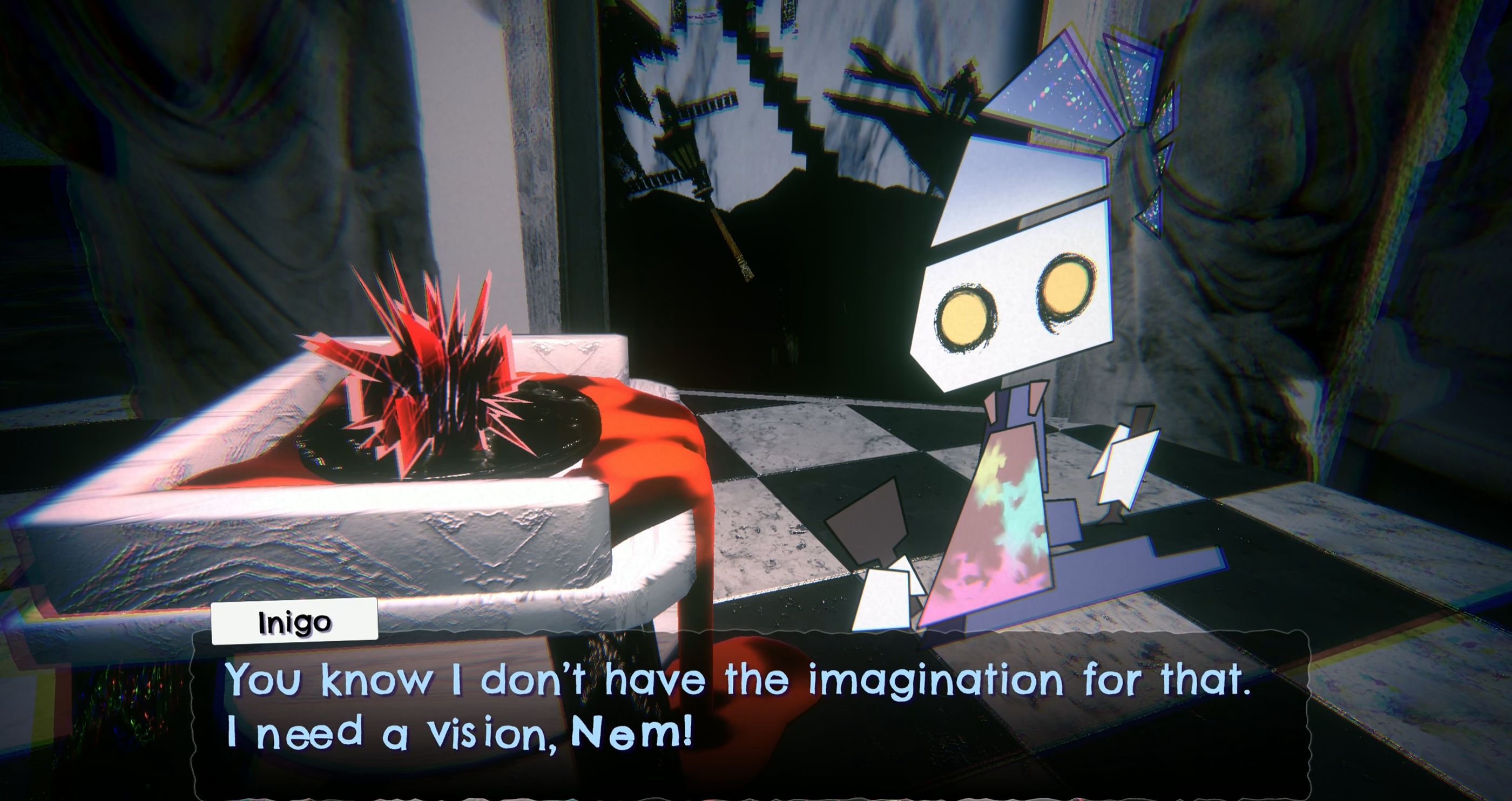
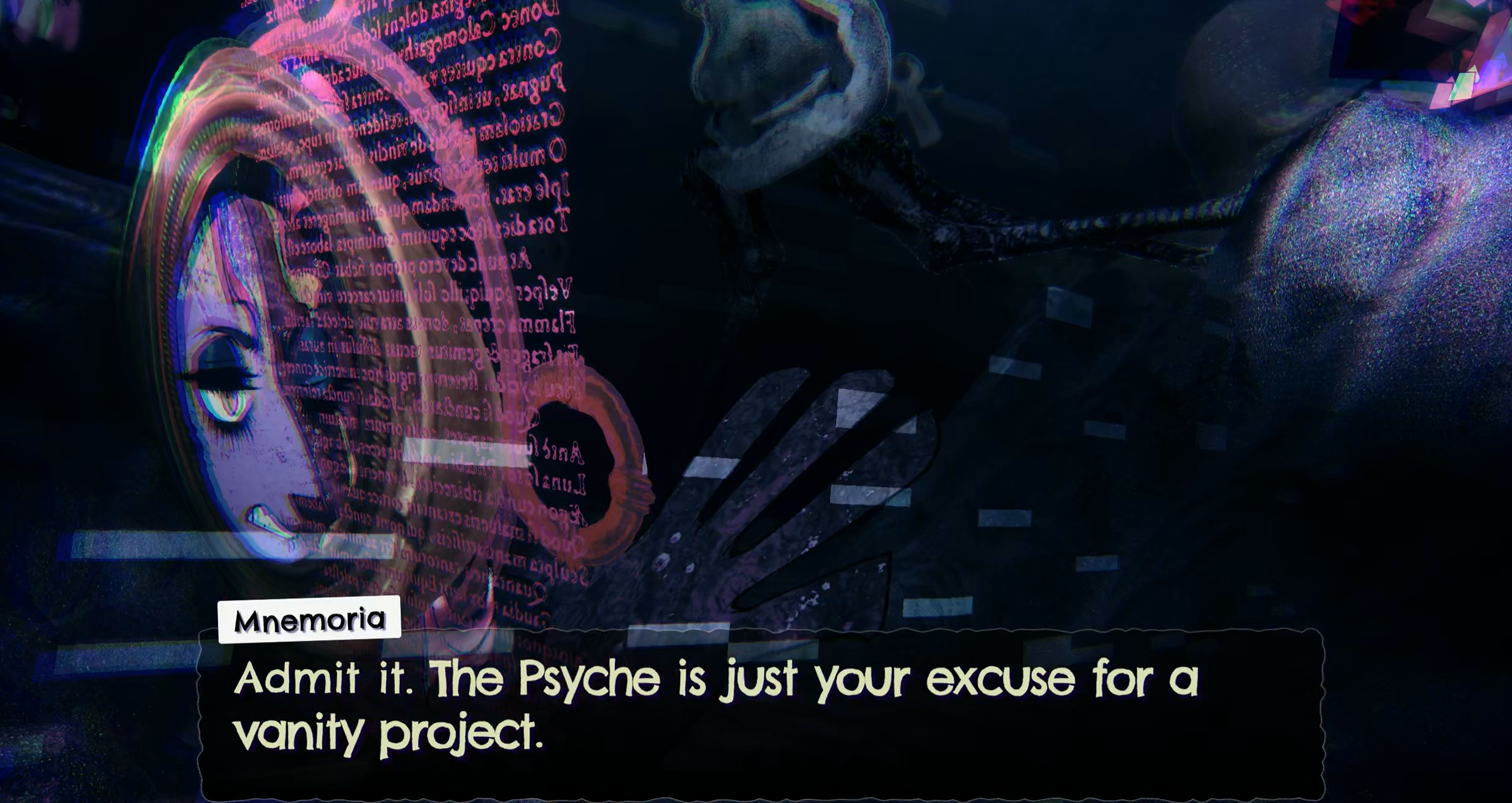
I don't think Beat, Heart, Beat is entirely removed from this phenomenon: you have artist names like "Dxsney Plus", or tracks named "Rodrick Gender Envy". What it does, though, is empower. Playing itself completely straight: visual novel-style interludes tell an abstract storyline of creators - creatives - failing to cooperate with each other. Disagreement, mismanagement, a lack of confidence. And so: we are forced to engage with each track hyper-earnestly as we smash notes perfectly to their rhythms. We play those crescendos Perfect!, and we feel something in our chests about it. The creators have tasked their creations with soothing wounds of the heart. We are, after all, expressing ourselves, so that we don't have to {Contain}.
On its face, Beat, Heart, Beat is aping on the 2-Row layout of Muse Dashes or Unbeatables, but with some extra spacial awareness crocheted-in. Unlike its contemporaries, the two rows do not represent two inputs, but instead - your character moves fluidly, and you input appropriately. Hitting "Up" to tap a high-row note literally vaults you into the air. Subsequent high-notes are now hit by inputting "Forwards", and low-notes then by attacking "down".
Most distinctly, jumping or diving when nothing is present will still reposition you. And, while button presses are measured in the usual ~ Bad / Blah / Blah / Perfect!! ~ timings, there is never an explicitly bad or good time to make those silent repositions. Its kinesthetics reminiscent of finding where you rest your fingers on an instrument, so that you can move them around fluidly. That sort of "figure out what works for you" most obvious in amateurs. And what better aesthetic scene to pull from than DIY - when your verdict refuses to settle on a single definition of "perfect"?
Lastly, it'd be professionally caustic of me to not mention this title's Early Access status. If you are getting into this around the time I put this piece up, you're playing approximately 30% of the full package. But, I'd like to vouch for that.
I think episodic structure lends itself well to a project like this. Digital publishing has I think, desensitized us all to funky outlining. But - if there's anything that's stayed true to every self-published webcomic: it's that naked growth. If you're publishing your fanfiction chapter by chapter, your from-the-start readers are going to notice you improve. They will remember you are alive behind that keyboard. It's encouraging. Compared to those the final products of who worked years behind closed doors; it makes art look achievable. I was sent a review copy of this game, but I think I'll keep checking in on it, purely of my own volition. I look forward to seeing those sharper scripts, those angst songs about events that haven't happened yet, and all the Jane Remover songs you freaks put in the steam workshop.
| Related Posts | Please enable JavaScript to see this navbox! |
|---|