~ Estimated Reading Time: 15 min ~
tired of the word 'perfect'. let's think of a better one
A world made out of "got it right on first try" mythos doesn't excite me. To imply we've ran out of iteration is to limit one's imagination. And yet!! Decades go by, and Beat 'Em Ups stay plateaued. Few have gotten the blueprint so down - so quickly - as Final Fight. It was not the first, nor the second attempt - but it stands out, when surrounded by peers piling up hundreds of bad takes.
When considering what would've become easier to recreate over time, one might jump to programming - but, a total freak's code stays ageless. The detailing embedded into each line of its enemy behavior is tough to replicate. Capcom wanted to give their challenge gauntlets more personality, and took the job personally. Every single class of grunt has a name; even the lackeys are played by C-List actors. Each and every one of 'em move with an individuality to justify that. They sway forwards and back, algorithmically deciding when and how to approach. it's all triggers and variables, but you can almost imagine the decisions playing out in these robot's heads. This was Capcom's next project after the first Street Fighter - infamous for its lack of character variety. But it had exactly enough depth for player-expression to shine through - perhaps, it was a necessary step in order to recognize that characterization could come through footsteps alone.
It's more cerebral than you'd expect. You'd presume the lack of any explicit guard button is a consequence of unsophistication, but it emphasizes your place in space. When every room has five or more dudes shuffling around - and your only countermeasures are thin jabs - you have to keep the high-ground. Adjusting where you feel comfortable standing - in awareness of not just your surroundings, but where your adversaries could be at a moment's notice - is the assignment. If you're cornered by bigger bodies in bigger numbers - that's a loss condition. Street Fighter had blocking, contrasted by mix-up; but they must've known that playing rock-paper-scissors against robots wouldn't replicate that appeal. Extra safety-measures once cornered can dilute that sense of risk into a lukewarm temperature; Final Fight's simplicity kept it broken into hots and colds. Its footsies resultingly are more like how it feels to play a fighting game than if more mechanically-literal.
Final Fight (1989)
Since every attack only aims to the left or right; the inclusion of a Z-axis reads as a space for dodging and weaving. But each flick of the joystick can make such fluid adjustments, it's hard to linguistically break down to just "aggressive" or "defensive".
If you walk into someone from the foreground or background, you grab them. Grabs are exciting, because throws transmogrify a foe into a hitbox. Their tumbling weight hits like a bowling ball clearing an alley of pins. It's not gonna do a ton of damage, but a whole row being knocked to their feet shifts the danger level dramatically. Your defense is about standing in safe space, and your offense is about redefining what space is safe.
It'd be easy to frame the hyper-complex enemy design as more important to the genre than player-character design. Above all else, though: Final Fight is about applying powerful options against a wide net of potential situations. Its last word on that topic is the Superjoy: a strong, instant, invincible, omni-directional Special Attack, that spends a chunk of your health in exchange. If you put yourself in a bad spot - but correctly recognize that - you spend to mitigate losing more than what you spent. They're like Bombs in Bullet-Hells, but even more essential in this newer framework of enemies-as-freaks. Board Game designers had already figured out that games with high variance in outcome need a few get-out-of-jail-free cards.
Final Fight (1989) is fucking awesome.
Aaaaaand....that's about it!
Now, don't get me wrong; B'mups didn't go extinct after that! You still feel the presence of their surface level appeals. But, these exact pushes and pulls seem to get muddier every year. Makes you think we've barely taken notes. That Final Fight's best tricks has stayed buried as a collection of trade secret's in an 80s' executive's drawers.
Shoot 'Em Ups make for a contrast: born earlier, existed at wider capacity, branched out into still-persisting sub-genres. Maybe it's as simple as that. I'd guess, though, that the early blooming of the Beat 'Em Up ironically held it back. Gradius provided a blank canvas: move in four directions, dodge hand-placed obstacles, draw the rest in yourself. Final Fight set a more rigid painting-style to follow; novel ideas thrown onto it are more likely to evoke a "this clashes with the pre-established". Or worse: this misunderstands.
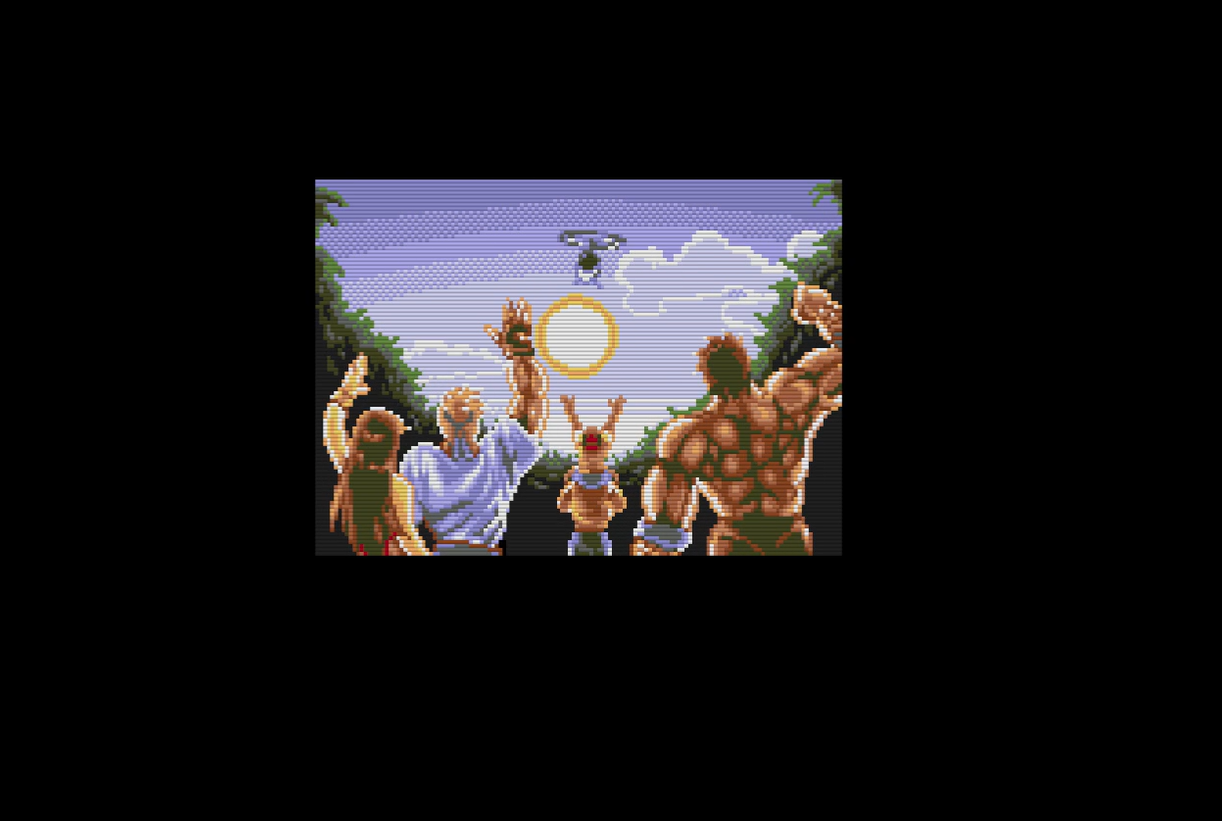
Three years later, though: a clear winner would climb out the rubble.
Almost mundanely so, even. It wasn't revered in creativity: it's still an 80's American action movie pastiche. Worn-out leather, pastel-neon, pulsating club music, gangster businessmen, and all. It's humbly basic on every front. And it might just be the best action game I've ever played. The best shit in the world. The coolest perfection has ever looked. THATS MY GOAAAAAAAAAAAAAAAAAAAAAAAAAA
Let's talk about Axel Stone. He is, speaking as politely as possible: Cody, but cooler. He is John Beaemups. A white bread, white tee, white guy. And I promise I mean it - when I say everything that's ever been interesting about the genre is slotted on him somewhere.
He's got the slowest walk cycle in your Genesis collection. All of your strategies hinge on pre-planning the perfect circle to sit at the center of, and keeping that ground. Your jabs are instant, your throws clear space, your specials erase mistakes. All of this is the same, but with every minutia perfectly placed. It stays balanced on exact equals.
Unbelievably; even glitches have been prettied up. An infamous one was Final Fight's Infinite Jab: throwing a punch behind you mid-combo would reset that combo, letting you avoid the final hit's knockdown. Lesser games would be smoothed down to a rote repetition, but the dance of landing the first strike was interesting enough alone. Still, though; being able swivel your feet so quick, you could combo the dudes standing in front and behind you at the same time..it lacked.... hm, what's the word...?
Friction?Axel can't do all that; he doesn't have the finesse to his footwork. He fought even simpler: enemies recover from stun slower than his jab resets to 1. You could rhythmically tap out 1-2 1-2s forever. In a vacuum, he can one-shot almost anyone. Just...slowly. Very slowly.
When we discuss The Game Design of the Combo, we fixate on execution. You think of inputting advanced arithmetic, just to make Dante mathematically destroy one guy. Streets of Rage 2 highlights the polar opposite. You follow a rhythm so simple, anyone can learn it in minutes. Almost immediately, you're left to digest how to apply them strategically.
In the first episode of Walking With Dinosaurs, the herbivorous Placerias huddle in a herd packed so tight, even the lethal fangs of an apex predator couldn't pierce that position. They literally didn't have enough time to bite down - at least, before getting their knees kicked in. Comboing Galcia tends to go similarly.
I love Galcia. He's the first guy you meet. His name is spelled wrong. He fights with bad posture; he's got slow reaction time. If you approach while he's at a stand-still, you'll almost always win the exchange. He has the lowest health in the game; you can kill him off in one exchange...faster than usual. It is exactly because of these weaknesses that the designers got such mileage out of him. He is the basest layer of pattern overlapping. You might fight more of them at once than the max object count Final Fight could render. And they're usually back-up. You'll never desensitize to how deadly five of them buzzing around a mini-boss. A tough dude gets a single hit on you, and his cheerleader squad extends his combo to steal half your health. They bare resemblance to the elegant enemy spam you'd eventually see in Zombie Shooters: like Left 4 Dead 2.
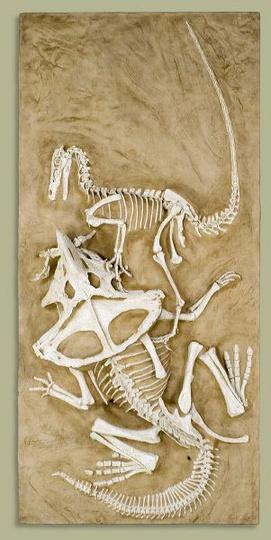
(i dont talk about it, but; i actually play skate. it kinda goes something like this)
While we're naming names: Resident Evil 4 is a big example of post-Y2K genre influence. When its verbs are abstracted, Leon Kennedy's crowd-control is identical to the grab 'n throw. You target a sweetspot, and are contextually granted a follow-up that culls the hoard. Halfway through, though - where you aimed begins to influence what that follow-up is, changing the space it covers. You route spacial specifics, to inflict spacial consequence. Tracing the line from one Capcom property to another feels intuitive enough. I just found it interesting, that - and, regardless of if Shinji Mikami ever touched a Sega console - his complexifications mirrored Ancient Corporation's.
You'll notice Axel's grappling diverged. When you're in a face off, but you get the first grab: your forwards-throw is now more of a forwards-shove. Hits individuals harder, but barely grazes the mob. Grab onto them from behind, and you'll suplex em' into the concrete. It's stronger than pummeling, but feels messy; taking advantage of another dude's position, rather than tightening your own. The unchanged nature of "grab them from the front, throw them behind you" being a big row-clearer makes it obvious what they're trying to encourage in you. Another shift to define your front - your fists - as a well-rounded guard, and your back as a weak-point you cover by thinking ahead.
(or just use your friends)
The next characters introduced feed into this: the Signals. These street-punks don't want a fair fight; literally programmed to never hit you head-on. They'll either flank around, or try to slide under you. The natural response is to put your back against the corner - but if they do squeeze in behind you, they'll toss you all the way into the center of the moshpit.
That's when you get aggressive, defensively. You strategically retreat in the opposite direction, all the way until catching up to some helpless Galcia, and lobbing them over your shoulder. They'll land on top of each other - two overlapped to lose to one fist.
When Final Fight dropped, whether you opted for health bars or instant death was still very case by case. By choosing the former - but, also making the bar's contents expendable - the genre was solidified as being about risk minimization, not risk prevention.
Both Streets of Rage 3 and 4 provide extra opportunity to use Superjoys without extra charge. You could say you're getting to use more of your toolkit - but maximalism was always the tool's purpose.
When we discuss high-level play, "damage-less" comes up often. It's easy to frame as optimal - it implies you never made a mistake. But, "flawless" isn't "perfect"; the lack of bad does not guarantee good. And, speaking to the rules-makers: there are better ways to make one risk it all on not taking another hit. SoR2's last new toy is the addition of an even more straightforward special attack - high damage, no invincibility, still consumes health. We aren't even avoiding risk, we're actively betting on ourselves to up the pace. When you reach those fully-healing dinner plates, every unspent pixel left is wasted, too.
Let's remember even our most mundane, video game-expected traits can be a tool, and then use it until it runs dry. What's a better definition of "perfect" than doing everything you possibly can?
The last enemy introduced in the uhhh....first two minutes, is Donovan. He plays Bouncer. He plays it slow, staying back until approach seems necessary. Apparently, they purchased a Street Fighter 2 cabinet to help study for this game; this is where we finally see those true-to-life recountings of campy Guile players. He moves wishy-washy, but he'll always punch you out of the air if you jump at him. He's never messed up a Flash Kick in his life. He gatekeeps big crowds, making sure there's no chance you'll get momentum by hopping into the party. The presence of consistent forces complimenting the inconsistent is exactly what justifies the omnipresence of the invincible attack. There can and will be times where strongholds of dudes reinforce each other so tightly, it's impossible to break through them unscathed. So, rather than making a more boring game, we've embraced the chaos of battling impossibilities.
None of this appraisal of limitations is meant to imply Streets of Rage 2 surpasses its predecessors because of its difficulty. Knots have been tightened, but it's actually drastically easier to run through than many of its predecessors. BUT! Imperfection is what lends dynamism - so I personally enjoy cranking it up.
The scaling of its difficulty options are impressively well-organized. It's playful in unusual areas. You don't take more damage from hits, enemy health rarely bulkier - it just packs with more character. Both in the literal sizes of the crowds, and the voices on display getting weirder, more pronounced.
The last breadcrumb that keeps the obsessives coming back is Mania Mode. Only accessible by cheat code, with the highest difficulty otherwise deceptively titled "Hardest". The developers must've felt it necessary to keep hidden. AND, YET!! Even what had been ashamedly tucked away is wondrous. Pick Mania if you want to see object counts that regularly make the screen start tearing. Pick Mania if you want to see a lil sentience in a Galcia's eyes. Pick Mania if you want to see things get weird. Me and my teammates joke about how our cartridge is haunted, or that we're tapped into PvP servers. "The good Donovan players must be online at this time of, huh?".
Movement so erratic, winning has never come down to luck more. The nerdiness floor has been raised; you're gonna wanna memorize some spawn-points. While many have cleared it without even losing a life, I haven't found any records a No-Damage Clear. Streamers commentate that they feel close to their absolute peak, like they couldn't inch out something better if they made it their life's work. I couldn't even find a TAS; if written inputs are like hypotheticals, nobody's even written theory.
What keeps me trying is how it pushes you to your limit. Its logic is opaque. When you know for certain that there'll be situations with no correct answer, it makes you want to try everything. Mania left us one last unsolvable riddle to work away at for the rest of history.
It was December, 1992: when we got as close as we ever have to winning.
I've been crate-digging through a dozen Beat 'Em Ups that came out after - it checks out as legitimately creative. Trying new things wasn't without purpose, either; I'd credit SoR2's tightness to it knowing where to cut its losses.
| Its weapon pick-ups - while useful to throw around - are underwhelming compared to your jabs. Undercover Cops places each of its weapons as a tug-of-war to grab before the opposing crowd does, reworking each each with multi-purpose. |
| While SoR2's core trio remain well-varied, its fourth isn't able to squeeze out the "Axel, but worse" bubble. Aaaand, she's the only girl!! Then, you boot up something like Guardians: Denjin Makai II, which has six idiosyncratically varied protagonists. |
| 2 had placements on stages so tight, you'd forget the game's actual stage design is mostly a bunch of flat rectangles. But....wait, which 2D Beat 'Em Ups even have varied stage design? Hello???! Is this thing even on?!! |
"These novel ideas could be wonderful", I thought, "If stretched to the maximal extremes that...basically everything in Streets of Rage had been". It brings me no joy to acknowledge my cynicism. In fact, these unexplored ideas have left indie devs with many shoes to fill. It's just that - I gotta admit, sometimes exceptional creativity cannot keep up with Streets of Rage 2, just because its frame data isn't as tight. It brings me no joy to point out the obvious: Video Games have a lack of study on fundamentals. Documented game design theory is driven by concepts and structure. To compare it to how theory plays out in the musical world: it'd be like if we had a dozen studies on why the 'verse -> chorus -> repeat' structure sounds poppy, but none on why arpeggios arpeggiate. Would Endtroducing... be as good if Björk hadn't been taught how to play Classical Piano?
Game Design in Indie spaces is associative: when an artist recognizes a game is special, they homage its superficialities before breaking it down into a science. When a developer says "Streets of Rage taught me to appreciate throwing guys into other guys", there's uncertainty on if that observation goes beyond the surface. Will you feel the influence of the exact distance parameters of 2's tosses? Will you remind me that Devil May Cry 3's parry lasts the exact same amount of frames as Street Fighter 3's? Can your favourite mechanics become beliefs? Inversely, I remain unimpressed even by those who do mark down the details. Those most dedicated to learning subtlety often seem content in leaving off at recreating it. Resultingly, nothing new is being brought to the table. When I call for more study of fundamentals, what I really want is fundamentals as foundation.
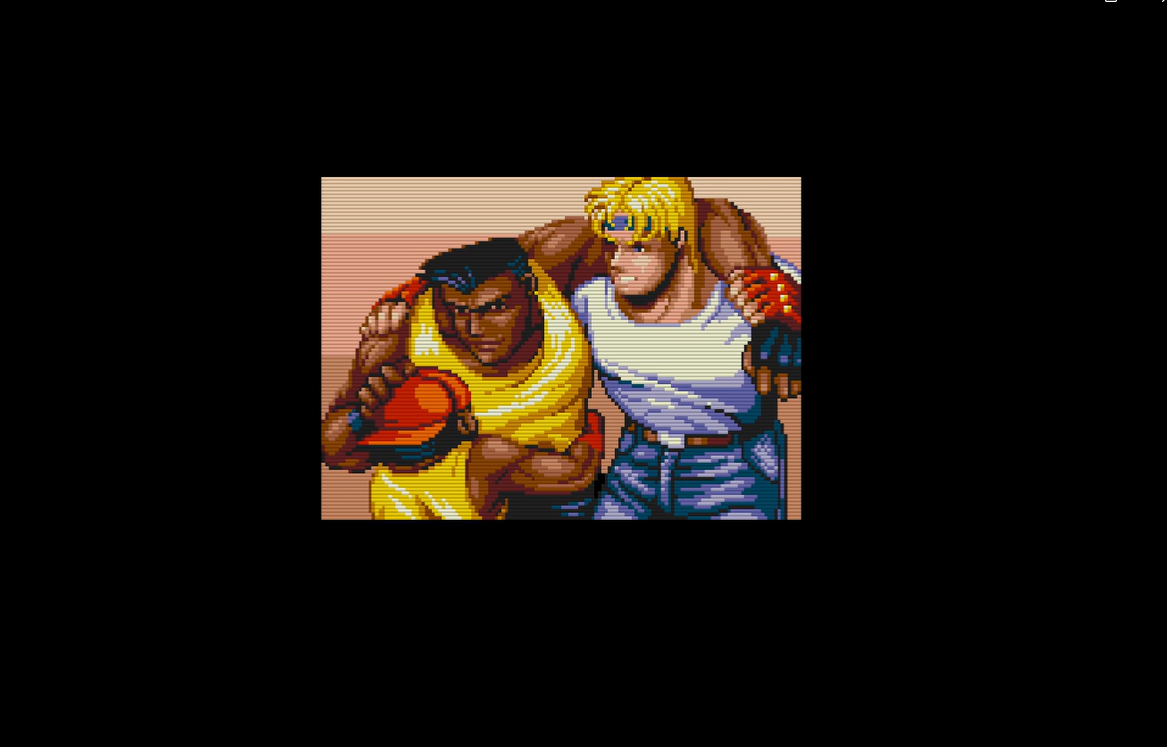
I want us to build on sturdier ground. To get more abstract. To recognize how a platformer's enemy could apply to a racing game, or a fighting game's hitbox to a JRPG. The immaturity of the medium is not something that fills me with pessimism. It just reminds me that game design theory is still young. Pong is still younger now than the first film was at the release of Godzilla. That child-like excitement at the idea we haven't figured anything out yet is what's kept me motivated to keep writing as of late.
 with the code on the background of this page!! |
| Related Posts | Please enable JavaScript to see this navbox! |
|---|