~ Estimated Reading Time: 5 min ~
What's the purpose of making a game that plays like another?
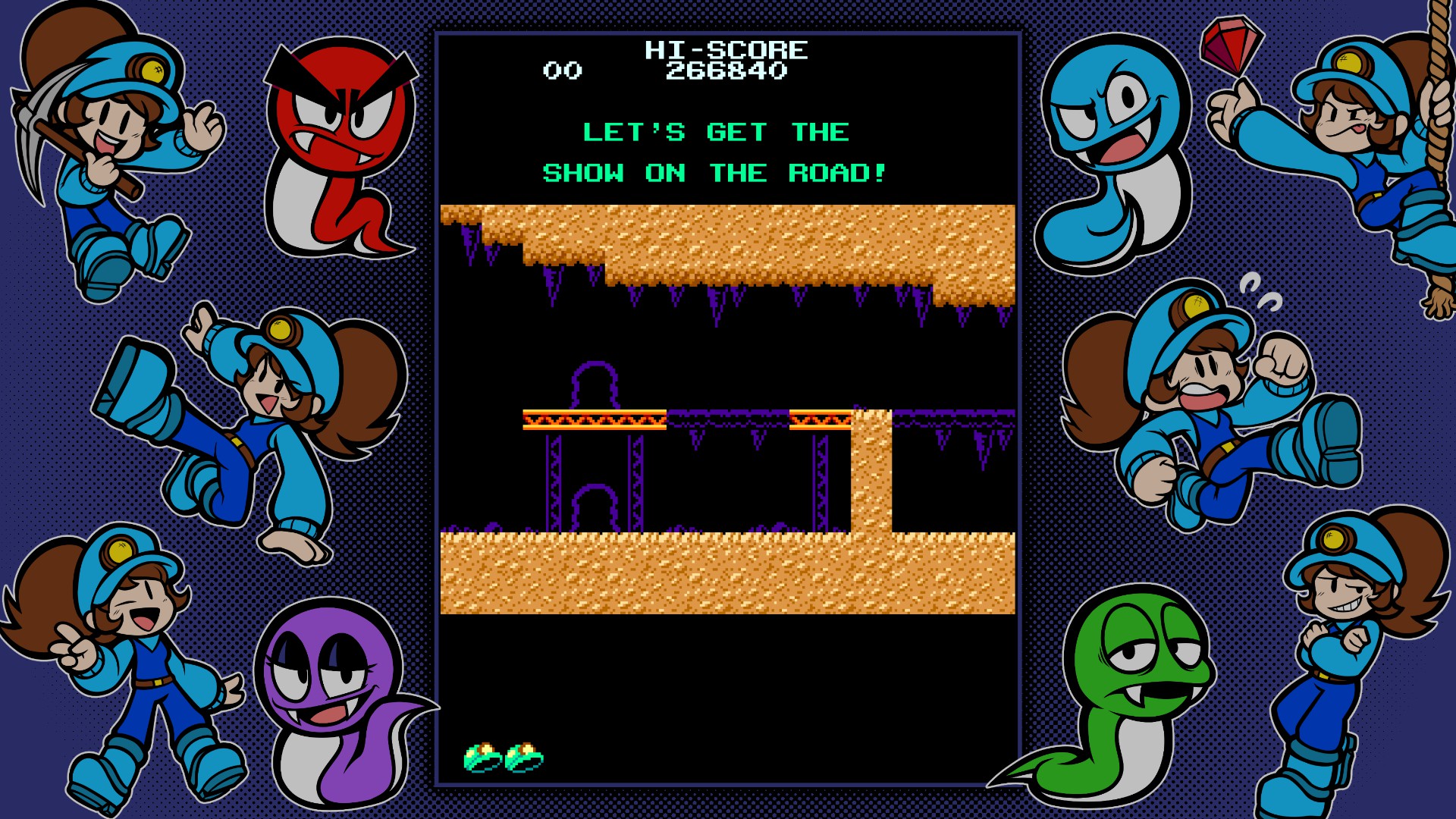
Annalyn's distinction from its 80s' Arcade influences is in the addition of a modern-platformer jump arc. You can drift back and forth as you please. This is still in tandem with a traditional Maze-game shtick: four enemies chase you around, each with personalities expressed through their movement. In Pac-Man, if you're cornered on every surrounding exit - that's checkmate. The emerging depth comes from thinking ahead, so you don't end up in those situations. In Annalyn, however, if the Snakes push your back against the wall, you just tap that jump button. The larger the crowd chasing you, the harder it gets to thread the needle. But there's always a path out. It's substituting thinky positioning for tight acrobatics. But it also makes me appreciate how those classic Namco chops had such defined win / loss conditions; you can always perceive your game-state from a quick glance.
Once more is that sidegrade-ambiguity present in its score. That number in the corner of the screen actually outlines clear goals. To use Pac-Man terms - Each Dot, which you'll necessarily collect all of in order to beat a level - provides a static reward. There's a couple Power Pellets per stage, and if you kill all four snakes at once, you get a big cash-out. Combine the required things with efficient usage of your power-ups (and the bonus fruit, i guess) - and you've done a stage optimally. Perfection isn't just static, but a cleanly laid out, achievable process - and your excellence is acknowledged with a flashing "PERFECT", and a confetti explosion of points. Oh - and I hadn't even mentioned that good grades materially reward you with 1UPs. So, to put it simply: You play the first minute of the game good, and you've already earnt an extra life.
Annalyn more naturally directs you to perfectionist play. Your qualifications are put firmly on the table, and even those who only care about survival are coaxed in. Nothing about that feels arbitrary, which is exemplary - if your goal is to pitch Arcade stuff to a new generation. But is opaqueness the problem with those old scoring systems, or were less intuitive rulesets still valuable? And if we don't mind that, then what are the flaws of Pac-Man?
For comparison's sake, I'm gonna try to break down just what I think a good scoring systems looks like.
A: Defining what skills are valued the most within the framework of play
The meanest thing I'll say about Annalynn today is that it succeeds at neither of these. My first reason is simple: the Pellets aren't the interesting bit! When I gather my core memories: it's those precise movements a step away from death. Becoming invincible is when I'm engaging with that the least. Lining up the Snakes mostly comes down to watching them re-organize themselves while camping on a platform they can't reach. It's replicating high-level Pac-Man's most documented criticisms: rewarding waiting-and-memorization oriented play. But unlike, Pac-Man - where Power Pellets always feel like substantial trades, since they're such vital safety nets - Annalynn's movement is loose enough that spending them isn't risky.
B: Defining then, what is going above and beyond that
I like when games feel a bit unclimbable. I don't mean that I can surmount them; I suck! That's not my thing; for me, it's rewarding to take a good few tries, and feel the depth. Pac-Man may not have that much more dynamic of score, but it is a near-infinite game. It doesn't need dynamicism for great runs to feel unsurpassable. Annalynn is not just finite, but short - and does not compensate elsewhere to make your potential feel more dynamic. You tell me that I played "perfect" within my first hour of trying something, and I'll think "that's it?".
This is why so many Shmups reward you for grazing enemies these days...
Despite that, though; there's still one area I've never mastered. It's not the end-game, or even close.
Initially, there are platforms that only enemies could stand on. This is to the player's advantage; It lets you bait them, and then fall beneath them to safety. Stage 2 flips this initial empowerment, and forces new strategies. Now the snakes will jump down from above - but they pause with a wind-up, so you can stutter your movement to bait them. But what really brings this all together is...umm..the piracy?
The best aspect is its shameless riffing from Donkey Kong Jr.'s Climbing mechanic. Vines allow for the stage to be built around vertical expanses. Grabbing a power-up scares the Snakes away from you, meaning they'll even go as far to halt their descent if you were about to bait them into jumping down. But the screen goes so high, that you're almost always sacrificing the chance to get every one of 'em - you literally cannot climb the vines fast enough to get from floor level to the ceiling. This means that you have to aggressively egg on the Snakes to re-group wherever you are. And that means making sneaky movements on the vines themselves; mixing the variable movement speeds of climbing to bait and punish.
You get the impression that Annalynn's creator is someone earnestly passionate about their interests. That their game enthusiastically line up all these deep cuts, in order to gush about their most beloved moments. And that, just maybe, their passion has tunnel visioned them a little. That these blatant points of inspiration are sanded down.
But stuff like Stage 2 still impresses me. It took this great slice from a game that, just about anyone will say is kind of bland in totality, and found a context for it to excel. It's almost like the art of sampling in music: stringing along underappreciated solos and drum loops into a synergetic form. That's where it justifies its existence as a derivative love-letter. It has the same appeal as any good sequel, remake, fan-game, or mod. It gives home to what needed it.
| Related Posts | Please enable JavaScript to see this navbox! |
|---|