~ Estimated Reading Time: 7 min ~
The short time I had spent reading Tsukihime's Near Side, while often capable of being formative, had been underlined by contents so cosmically scuffed, that it became difficult to reconcile with in retrospect. As I lose track of specifics with time, I'm left with prickly memories of messy poignancy sandwiched in-between scenes of malaise fuckshit that only makes it harder to quantatively weigh my feelings for. Reading through the remake felt appropriate - both as an opportunity to recap before moving on to its still unread Far Side half, and to re-evaluate it as a whole.
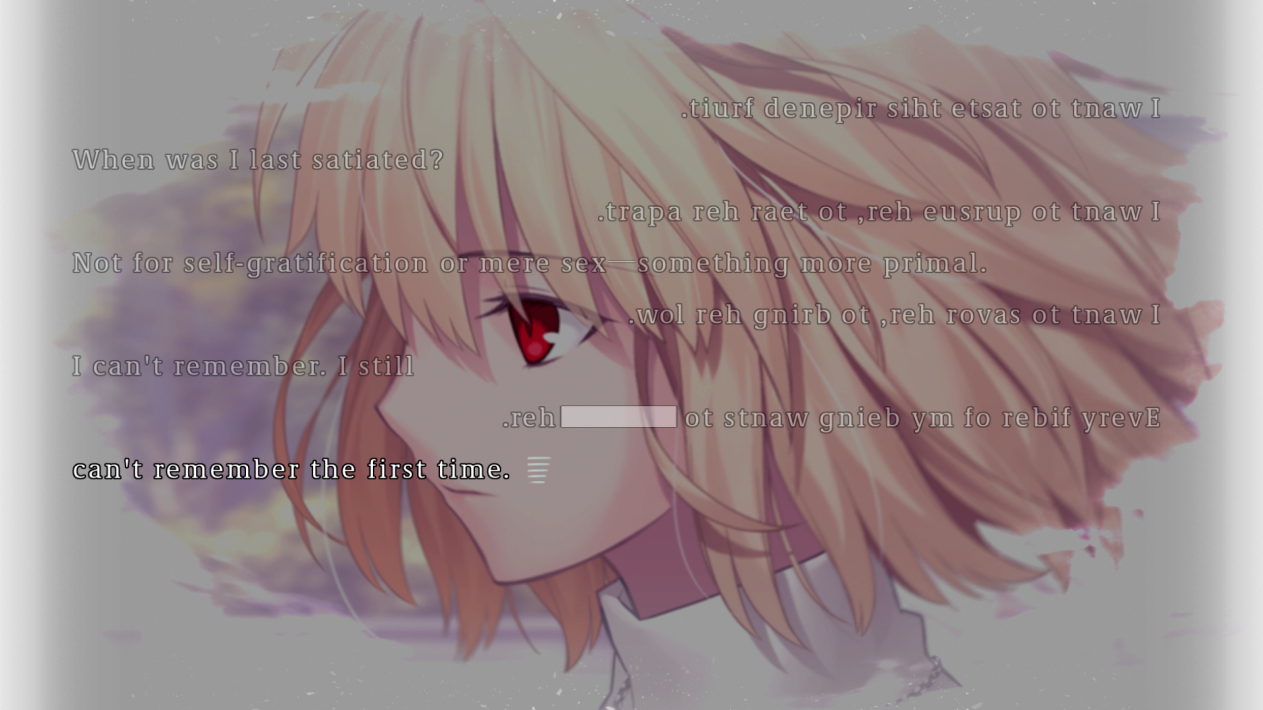
Critiquing fan-translations always deserves reserving sympathy: its initial fan-translators warrant infinite, undying praise for bringing us any way to read it at all. Mirror-Moon are all legends. But doing un-paid work, being younger, less educated - most likely distant to Japanese culture as a whole - and presumedly wanting as little of their own personalities to encroach on an esteemed title...all compound into something that reads overly literal. Meanwhile, clear emotional intent drips from each word in A Piece of Blue Glass Moon; it is of miraculous quality. Though, the remake being so different from the original even in its native language makes a perfect comparison impossible; I couldn't tell which improvements are lines being localized clearer, and which are true version differences. And that's not even accounting for the human margin of error as I weakly recall what the original was even like...
This, alongside word of mouth of it being a more tactful work, set the impression in my mind that this was where Tsukihime's story would perfectly click with me.
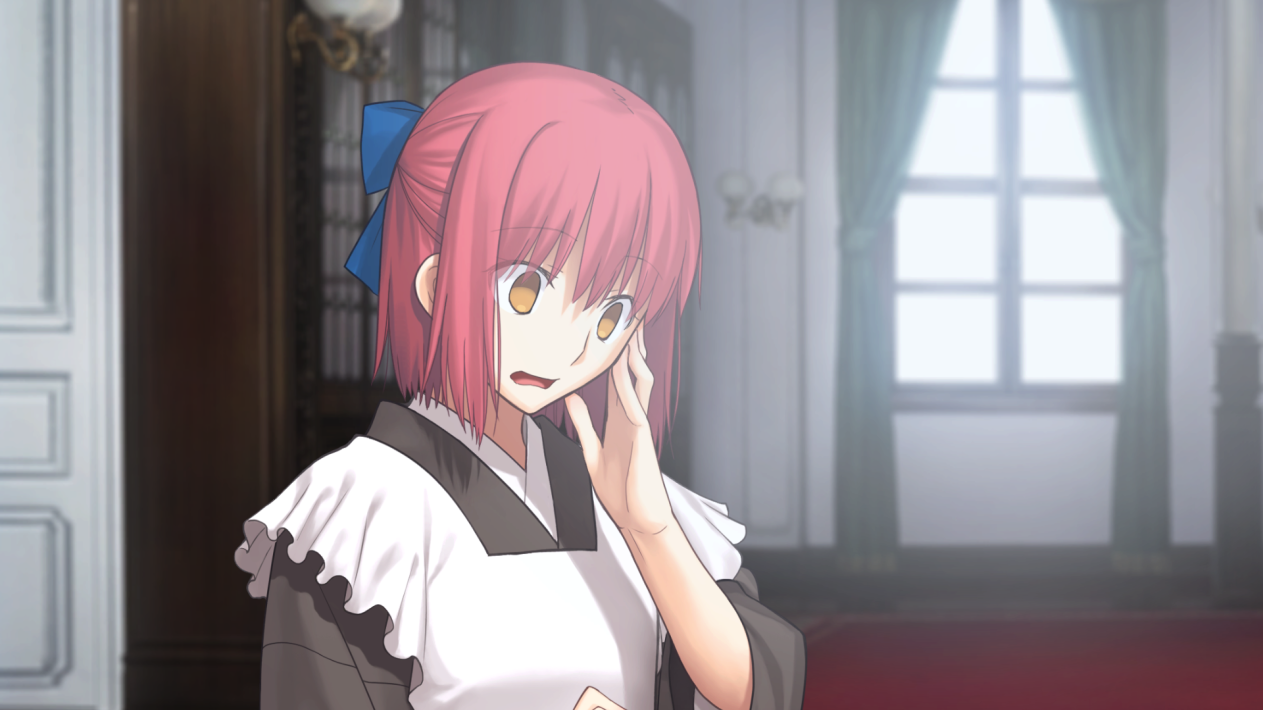
The gentle frailty of Shiki as our vessel into its world offers a lot of my emotional connection to this. Above all else, Tsukihime expresses itself through pain. Every morning is greeted with a sharp ringing of pain through our protagonist's head, as he fumbles to suppress it with his glasses. It laments of the dull pains that occupy our day by day - that when encountered so commonly, we learn to regard our existential fear as an annoyance to ignore. Pain as mundanity / tastes like Ibuprofen. Shonen battle sequences take this pain to an exaggerated aggression - often already in full-body agony before a hit is even taken. The most brutal spears the visual novel paints are psychological. Conflicts purely emotional become solely expressed through burning cold sweats, and creeping itchiness of skin. Pain as punctuation.
So when we ask ourselves if this hurting is worth it, we can only be plainly confident that it makes moments of genuine joy stand out as more beautiful. Spoken as if it was an obvious dormant truth never quite consciously thought of, until we're forced to see what it's like for someone not to understand that.
love between one who lives on the verge of death but always quite alive, and the millennia-old who hasn't lived for a day
All of this trickled down into a heightened experience that I hoped would get me more immersed into its world through its protagonist...though that isn't still without struggle. I never felt like I 'got' the romance of Tsukihime (2000); finding Shiki in particular to be a bit excessively cold of a partner, one who never felt like he had earnt affection from either heroine. Despite that, the pretty concepts that form the romantic dynamics still stuck out to me.
It's at its best when it is capable of being genuinely cute! I love the dorkiness of the scene where they see a love movie together. Whether you interpret Shiki thinking the movie sucks as him repressing his ability to relate to affection, or Arcueid only loving the movie because of how little life has afforded her to experience (or a combination), the implications left me charmed by both of them.
But at large, the remake has only grown more starkly self-serious in its drama, despite retaining romantic stiffness - its extended length only drawing us further from the payoffs that'll hydrate its tone. One can only enjoy being stuck in the head of Ataru-Moroboshi-played-straight for so long!! And Arcueid's relationship is very much one written only from the perspective of Shiki as a self-insert - she is very much the embodiment of the romanticized memory of a world-turningly dreamish girl who lit up a very boring boy's life. I try not to be too cynical about that sorta thing, but I find it increasingly difficult to take seriously artistically as an adult. I just had to accept that Blue Glass Moon doesn't beat the for teenagers allegations.
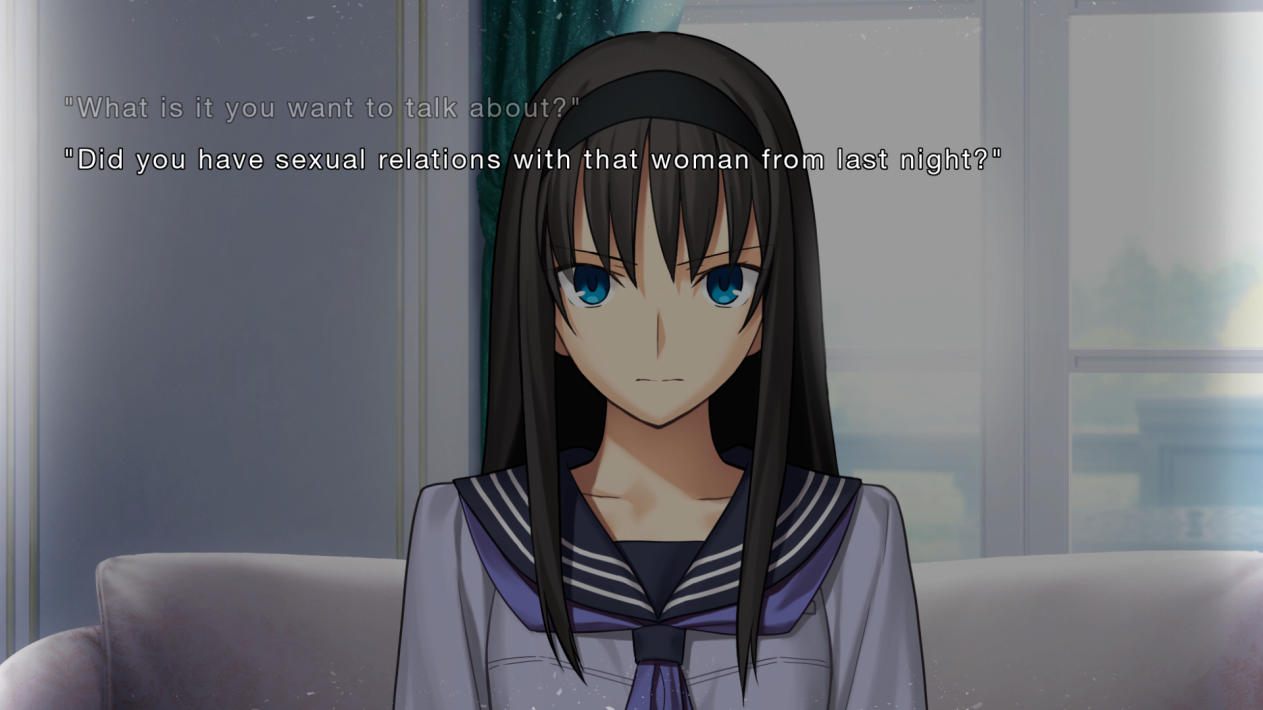
So maybe it was futile to expect that they could make a story that was perfect for me out of one that previously wasn't. I was sifting for platinum in a gold mine. And as I made my way down Ciel's route, I began to think that this whole project was being domineered by the same obsession over the idea of a perfect version of Tsukihime that convinced me to read another incarnation of this story in the first place. It introduces a whole new revolving cast, seemingly just to define the point of Ciel's story louder and harder. Knowing it had been seen as vastly inferior to Arcueid's route in the local fandom gives the impression that its changes are ruled by insecurity. And as someone who liked her story already, its attempts to win me over were at times condescending.
And I'd still say Remake Ciel's route is incongruent with the original's mood, which makes this hard to recommend as a replacement (as if any remake ever is) rather than a supplemental piece. Where the tension was once carried by the steady decline of Shiki's physical and mental wellbeing, the remake defibrillator-zaps him back to full functioning whenever an epic action scene is up next. But as I read through it with skepticism, I shocked myself when I realized how I honestly felt about it: I kinda like the new stuff here more than I ever liked the old stuff? Like, yeah - how Noel fits into the narrative puzzle feels contrived to me - but her presence in of itself is lightning in a bottle. Her and Mario unhinge the tone in a way Shiki's stock character ass writing often can't keep up with. That sparkling Shonen tinge that existed in a larval stasis twenty four years ago has metamorphosized here, where the fervent details of one character's weapon alone can light my imagination on fire. It relies on so many less camera tricks to make its world feel huge. Roa's backstory, for example, has been facelifted into some deranged humanist-extremism stuff. It portrays TYPE-MOON's unique brand of vampires as an upper society of nerds, who spend their boundless years on making Perfect Works out of the blood of their flawed ideas. He's an exemplary example of a relatively weaker pre-existing character really earning their mids here. And even if I thought it was gonna end like 8 times before it finally got there, that final fight? Mwah - truly delicious, gigantic and ridiculous in ways I wouldn't ever want to spoil.
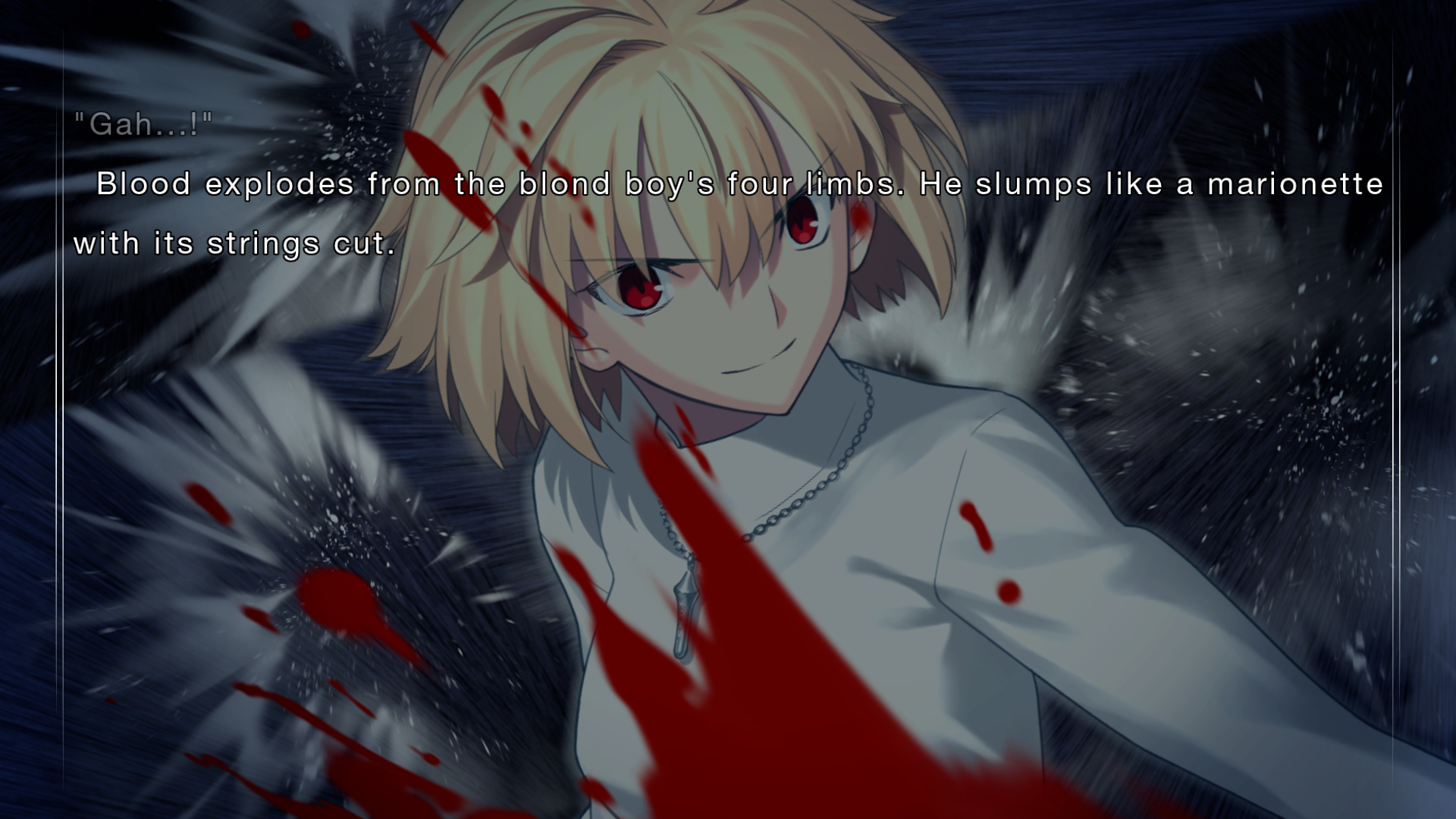
For years have people spoken of the scene in which Shiki kills a white woman for no reason, but not as many talk about what happens after that - in which he stumbles over to a park bench covered in blood and talks to Ciel. Shiki's saying "I don't understand my own actions at all. What is wrong with me? Should I die?", and Ciel is like "Well, if you're conscious of it you couldn't be so bad :)", and the conversations without honest comfort. Tsukihime dwells on the insecurity that our weakly controlled impulses might be making us sub-humans, while we speak to pretty cool people who are, objectively speaking, not human. It's neat, and the remake - which ironically, structurally makes it impossible to see that scene initially - got a lot of warm memories back into their rightful places in my brain. It helped earn back a lot of faded appreciation I felt for it, and I've come to a solidified conclusion that I quite like Tsukihime. It did leave me thinking about how useful endlessly re-evaluating something until you love it can really be; with limited time in consideration, sometimes it's just better to move forward in an author's chronology, seeing some real lateral improvement. But it's nice that I felt that subtle shift in mindset as I kept reading: once feeling ready to move on, next feeling excited to move on. The clearly post-Fate/Stay Night-ian rhythms of world development had me once again in awe of the potential and uniqueness of this style. Tsukire won me over in the end, but not without making me daydream of the unimaginable artistic growth that must've taken place between these two bookends for its style. I'll have to visit the Red Garden one day...
| Related Posts | Please enable JavaScript to see this navbox! |
|---|